Projects
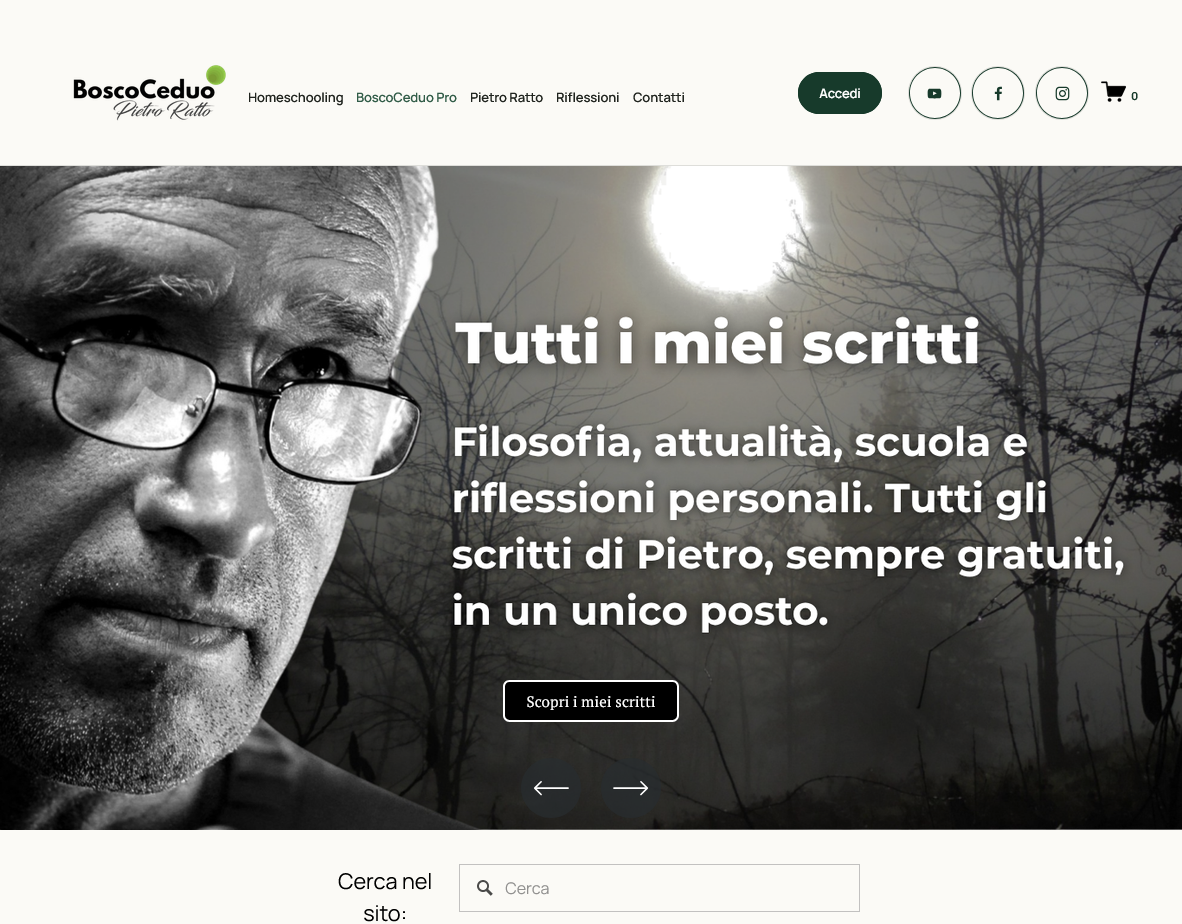
BoscoCeduo.it
Educational platform for Pietro Ratto (philosopher, historian, journalist), built on Squarespace: subscriptions to exclusive content, homeschooling courses, over 49 member sites by subject. I handle the complete technical management: security, redesign, and automation.
An audit uncovered an active security bug — a free subscription tier, meant for one specific case, was publicly selectable on some paid pages, effectively bypassing payment. I fixed the issue and cleaned up over 30 redirects to consolidate duplicate pages.
The homepage was just a summary of links, with nothing encouraging visitors to stay: I redesigned it with a dynamic 9-slide carousel, building from scratch features Squarespace didn't offer natively — autoplay with smart reset on touch, fluid image scaling across every screen size, a pure-SVG star rating system.
The piece I'm proudest of is a Telegram bot I run on a Hetzner server: it automatically monitors new videos, livestreams and blog posts, and routes them through a button-based approval flow before publishing to a channel with hundreds of subscribers. The trickiest part was handling scheduled events — the site doesn't expose the event's real time, only the page's writing date, so the bot pulls the actual time directly from the "Add to Google Calendar" link, sends multi-stage automatic reminders, and detects cancellations on its own.
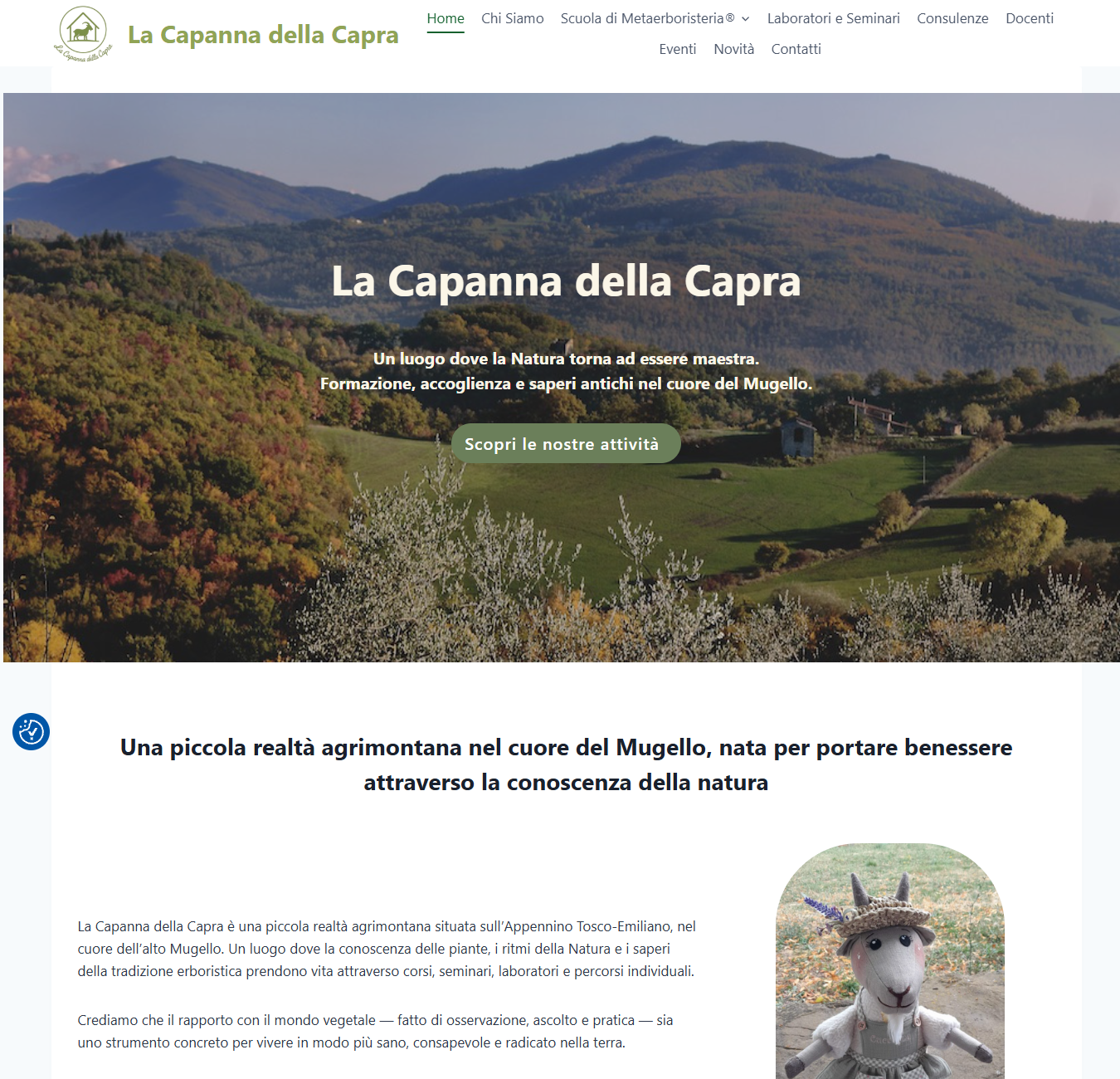
La Capanna della Capra
Website for Isabella Barreca, founder of the Scuola di Metaerboristeria® (School of Meta-Herbalism). What started as a simple restyling became a complete platform: institutional site, course management, newsletter and dynamic events calendar — built and maintained solo, with no other developers.
Along the way the client changed their business identity — from a non-profit to an agricultural business — and I had to systematically revise copy, legal pages, and even the technical Google Maps queries to align with the new brand.
I deliberately chose a lightweight stack (WordPress + Kadence + native Gutenberg) after the first, heavier version kept crashing due to the limits of the free development hosting — a technical choice that doubles as a brand message: essentialism as authenticity. Among the custom problems solved: a PHP shortcode written from scratch to show images in RSS feeds, a color-coding system for over 34 events on Google Calendar, and the full setup of professional email infrastructure (SPF, DKIM, DMARC).
Study assistant for naturopathy
During my studies I realized the real bottleneck wasn't understanding the material, but organizing it: hours of recorded lectures, dozens of textbooks, scattered notes. I built a pipeline that automatically transcribes lectures (Whisper, via Google Colab) and a personal application prototype — a knowledge management system — that reads PDFs and course materials and automatically generates summaries, outlines and review questions through the Claude API, exporting everything to a Word file ready for studying. A project born for personal use, but probably the most direct example of how my two skill sets really intertwine.
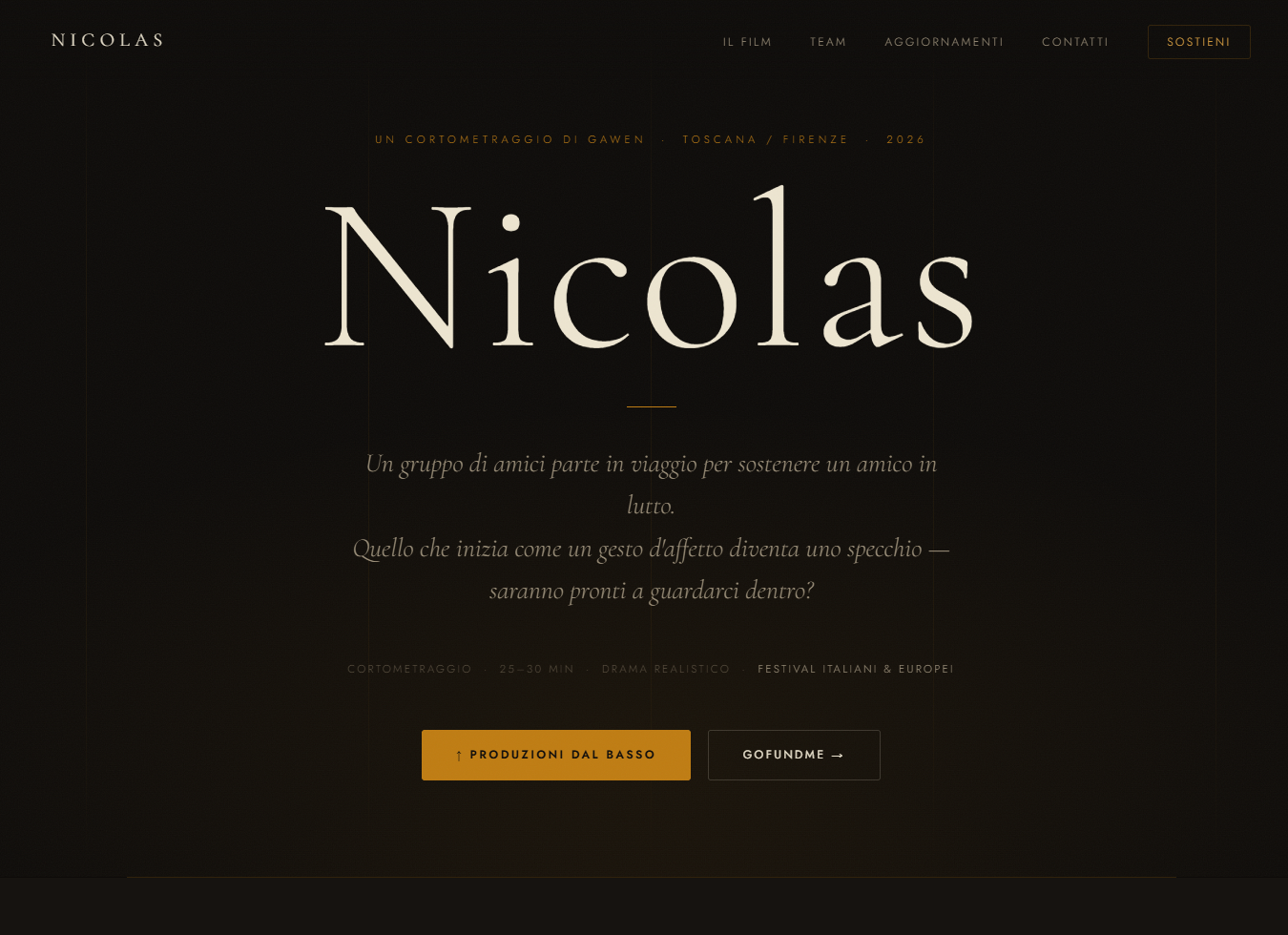
Nicolas — short film
Website for the fundraising campaign of the short film "Nicolas," with sections dedicated to the project, the team, and links to crowdfunding platforms (Produzioni dal Basso and GoFundMe).
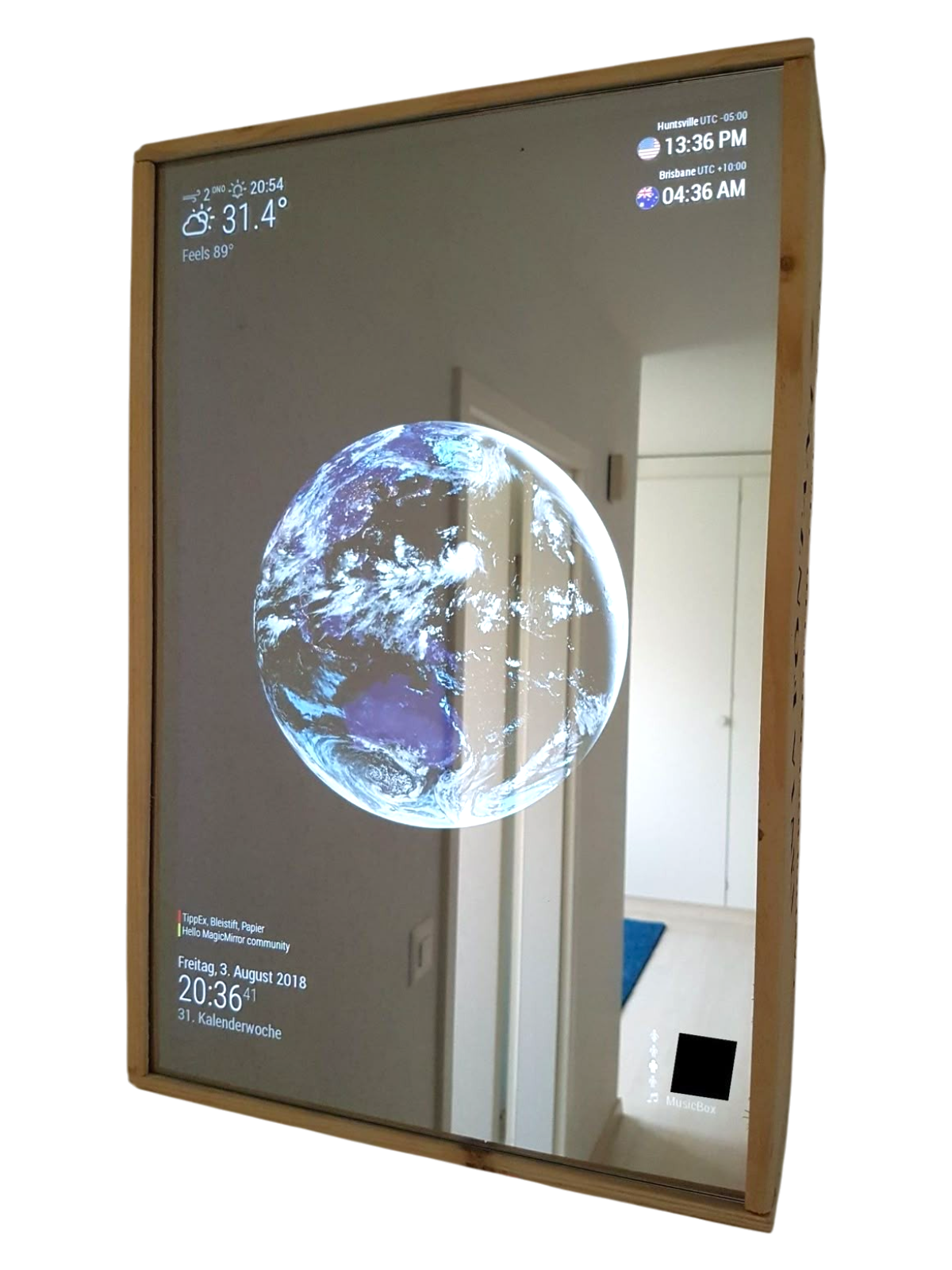
Smart mirror
Before becoming a developer I trained as an electronics technician: between exercises with PLCs, an alarm system, and even a fingerprint-reader safe, the project I remember most fondly remains the smart mirror from my high school final thesis. A two-way mirror, an old recycled TV as a screen hidden behind the glass, an Android-based microcontroller, and an infrared touch frame: the result was a mirror that displayed news, weather and videos — with a custom frame made by a framer. A small taste of what would later become my broader passion: making things smart and automatic.
(reference image, not the original project)